Metal Stamping Services
High quality metal stamped parts from short runs to production in the millions.
Send Your Inquiry Today
The Stamping Technique
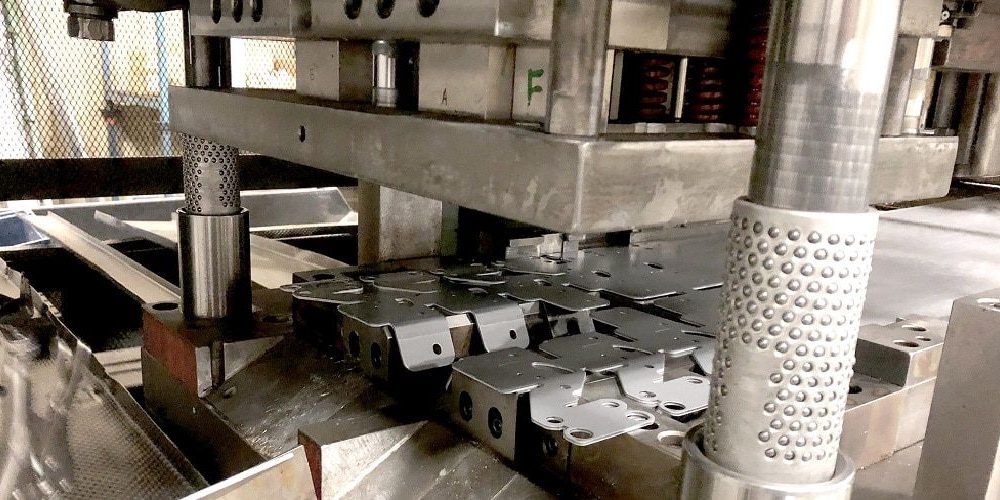
Metal stamping is a fabrication technique where material in the form of coils or flat sheets is shaped into specific designs. This process includes a variety of methods such as blanking, punching, embossing, and progressive die stamping. Depending on the complexity of the part, these techniques can be used in combination or individually. In this process, blank coils or sheets are inserted into a stamping press that employs tools and dies to create detailed features and surfaces on the metal. Metal stamping is a favored method for efficiently producing a wide range of intricate parts, including everything from car door panels and gears to small electronic components found in phones and computers. It's a prevalent process in industries like automotive, industrial, lighting, and medical, among others.
TOPS manufactures custom metal stampings in various materials, including copper, brass, stainless steel, and steel alloys. We offer production volumes up to over one million stamping parts and maintain tight tolerances, all with competitive lead times. Please take advantage of our precision metal stamping service by starting an online quote at the top of this page.
Our standard sheet metal stampings accommodate a wide range of part sizes, from small to large. TOPS' supplier network is equipped with a maximum press bed length of 10 feet and a width of 20 feet, allowing us to efficiently handle various dimensions. We typically stamp metal thicknesses ranging from .025 to .188 inches, but we're also capable of working with materials up to .25 inches thick and potentially more, depending on the specific forming technique and material involved.
Our project managers and specialists take a hands-on approach, personally reviewing and manually quoting each metal stamping project to guarantee that it aligns with your distinct requirements, all while ensuring a swift and seamless manufacturing process. For more information on our methods and what we offer, please refer to the detailed sections below.
Advantages of Metal Stamping
Stamping is ideal for the mass production of complex parts, offering significant benefits including:
- The ability to create intricate forms and contours.
- Capability to produce high volumes, ranging from thousands to millions of parts annually.
- Techniques like fineblanking that facilitate the forming of thick metal sheets.
- Economical cost-per-piece, especially beneficial in large quantities.
Disadvantages of Metal Stamping
The disadvantages of metal stamping primarily relate to its initial setup costs and timelines. While production becomes quick and cost-effective once the tooling is complete, the drawbacks include:
- Extended lead times for initial parts due to the time required for creating the dies.
- Upfront costs associated with tooling, check fixtures, and non-recurring engineering necessary to establish stamp production lines.
- The need for suppliers to frequently iterate on the die design to ensure the final product can be reliably manufactured to the specified requirements.
Metal Stamping Materials
TOPS provides a range of materials for both our standard and custom metal stampings, including:
- Steel: Cold-rolled steel (CRS) such as 1008, 1010, or 1018 is commonly used. It's a versatile, general-purpose material well-suited for cold forming.
- Stainless Steel: Options like 301, 304, and 316/316L are available. 301 stainless steel offers excellent tensile strength. 304 provides superior performance and corrosion resistance at higher temperatures, while 316/316L has the highest corrosion resistance among them but comes at a higher cost.
- Copper: Including C110, known for its excellent conductivity and formability.
- Brass: Brass 230 (85/15) and 260 (70/30) offer high formability and corrosion resistance. They are commonly referred to as red and yellow brass, respectively.
For needs beyond our standard offerings, TOPS can stamp other sheet metal materials upon request. Please contact our team to discuss your specific material requirements.
Additionally, our stamping materials can undergo various post-processing treatments such as bead blasting, powder coating, chem film, anodizing, and plating in finishes like gold, silver, or electroless nickel.
Get More Tips With Our Complete Design Guide
Send Your Inquiry Today
Types of Stamping
We provide a range of stamping methods, including single and multistage, progressive die, deep draw, and fourslide stamping, to guarantee the most efficient manufacturing approach for your products. Xometry's professionals are equipped to pair your project with the suitable stamping technique by examining the 3D model and technical drawings you provide.
- Progressive Die Stamping employs a series of dies and steps to fabricate deeper and more intricate parts than what single dies can typically produce. It allows for the creation of multiple geometries in a single part as it progresses through different dies. This method is particularly advantageous for high-volume production and larger parts, making it a favorite in industries like automotive. Transfer die stamping operates similarly; however, while progressive die stamping keeps the workpiece attached to a metal strip throughout the process, transfer die stamping detaches the workpiece and transports it via a conveyor.
- Deep Draw Stamping is used to produce parts with deep, hollow cavities, such as enclosed rectangles. This technique is known for generating particularly rigid components due to the significant deformation involved, which compresses the metal and enhances its crystalline structure. In contrast, standard draw stamping, which employs shallower dies, is also widely used for shaping metal into less deep configurations.
- Fourslide Stamping as the name implies, molds parts from four different axes rather than a single direction, making it ideal for producing small, complex parts like electronic components, including phone battery connectors. It is valued for providing greater design flexibility, reduced production costs, and quicker manufacturing times. Due to these advantages, fourslide stamping is widely adopted across various sectors such as aerospace, medical, automotive, and electronics.
- Hydroforming represents an advanced form of stamping. In this process, metal sheets are positioned on a die with a specific bottom shape. Above it, a bladder filled with oil is pressurized to exert force on the sheet, molding it into the shape of the lower die. This method allows for the simultaneous hydroforming of multiple parts. While hydroforming is known for its speed and precision in shaping parts, it typically requires a trim die to separate the finished components from the sheet metal afterwards.
- Blanking is a process that involves cutting individual pieces out of a larger sheet of metal as a preliminary step before they are formed into shape. Fineblanking, a specialized version of this technique, is known for making exceptionally precise cuts that result in smooth edges and flat surfaces, enhancing the overall quality of the final component.
- Coining is a specific form of blanking that is used to create small, round workpieces. This method applies substantial force to shape the metal, which not only forms the piece but also hardens the material and smoothens out any burrs or rough edges, resulting in a cleaner, more defined finish.
- Punching is essentially the inverse of blanking; it involves creating holes or cutouts in the workpiece by removing material, rather than cutting out the workpiece itself from a larger sheet of material.
- Embossing is a technique used to create a three-dimensional pattern on the metal surface, producing designs that are either raised above the surface or set into it through a series of depressions.
- Bending involves shaping metal along a single axis, commonly used to form U, V, or L-shaped profiles. This technique is executed by securing one side of the metal and bending the other side over a die or by pressing the metal into or against a die to achieve the desired angle or shape. Flanging is a similar process but is typically used to bend tabs or specific sections of a workpiece, rather than the entire piece.
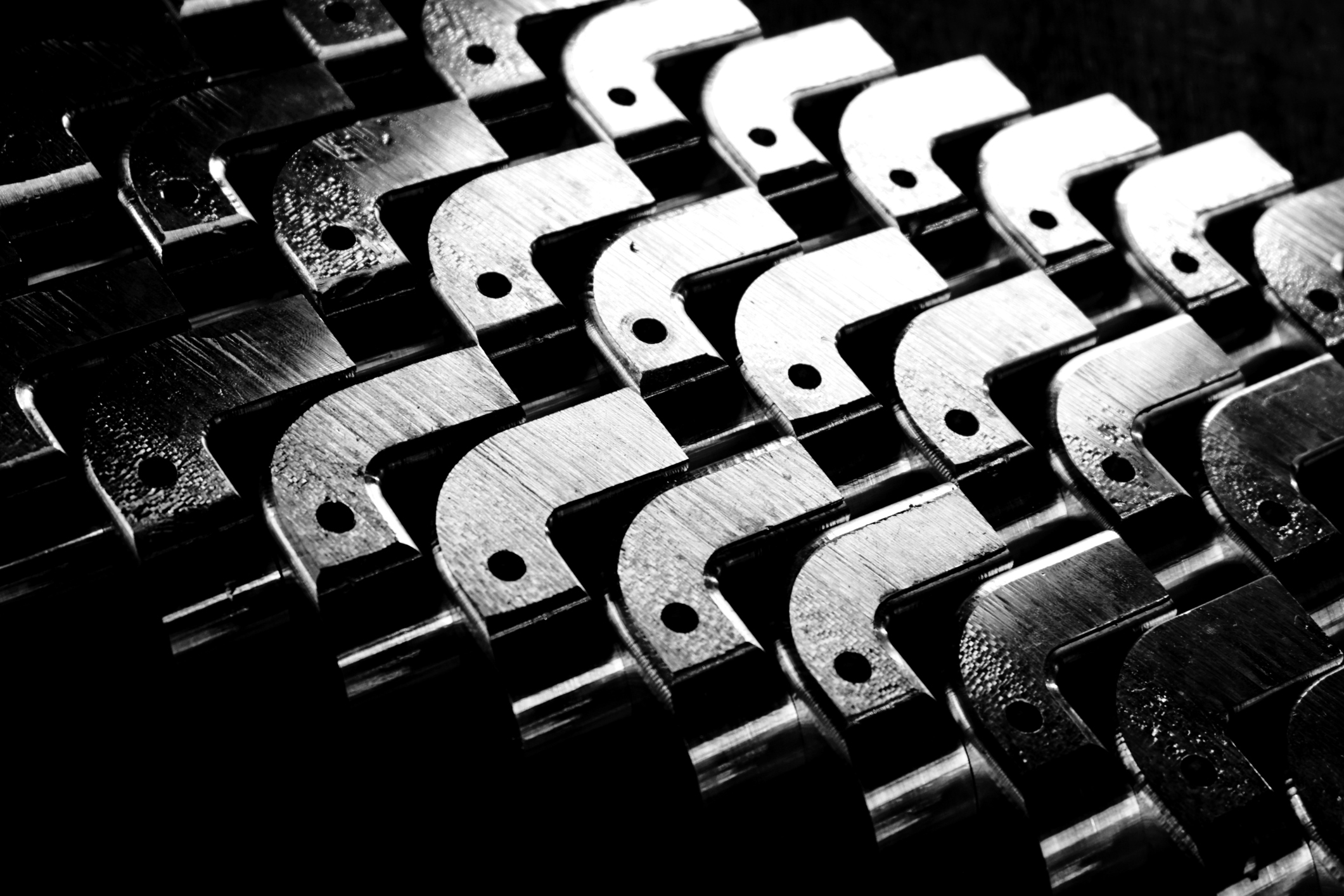
Output of Metal Stamping Production
TOPS offers an array of production volumes for sheet metal stamping to suit different project needs:
Low Volume Production
This category includes orders up to 100,000 units. To ensure cost-effectiveness, most stamping projects start at a minimum of 1000 units. Customers typically opt for low volume production during the transitional phase from prototypes to full-scale manufacturing or to test market reception. It's also beneficial for those seeking custom products. TOPS provides competitive per-unit costs, even for smaller quantities.
Medium Volume Production
Ranging from 100,000 to 1 million units, medium volume production balances the flexibility of smaller orders with reduced per-part costs and lower upfront tooling expenses.
High Volume Production
Comprising orders exceeding 1 million units, high volume production is highly economical in metal stamping, significantly reducing the per-unit cost due to the amortization of custom tooling expenses.
Short Run Stamping
This refers to a low-volume production run that minimizes tool modifications. It's cost-efficient due to reduced changes in processes or equipment, making it suitable for parts that require minimal variation, low quantity, or are for entry into a new market.
Long Run Stamping
Characterized by variable factors and the capacity for greater adaptation over time, long-run stamping is geared towards optimizing the production line for scale. Although it involves higher costs due to continuous adjustments in processes, materials, or machinery, it yields consistent quality, low per-unit costs, and impressive production rates.
Strict Tolerance
Our precision metal stamping services are capable of shaping parts for industries including aerospace, automotive, telecommunications, and electronics. Our suppliers work diligently to achieve your specified tolerances by continually refining the tool and die designs, ensuring the final product meets your exact needs. However, it's important to note that achieving tighter tolerances may increase complexity and cost. Precision metal stampings are used for a variety of components such as brackets, clips, inserts, connectors, fittings in consumer appliances, electrical systems, aircraft, and vehicles, as well as for creating medical implements like implants, surgical instruments, temperature probes, and various parts in medical devices.
To maintain quality and consistency, it is common practice to perform regular checks after each production run to ensure the parts continue to meet specifications. This is part of a Total Productive Maintenance (TPM) approach, which includes monitoring for wear in the stamping tools, typically made of durable D2 steel. For long-run stamping projects, using a check-fixture or gauge to measure parts is standard to ensure each piece remains within the required tolerances.
Metal Stamping Parts by Industry
We provide metal stamping services tailored to various industries and applications. Our offerings encompass sectors such as Automotive, Aerospace, and Medical, among others. More details include:
- Automotive Metal Stamping - Our services are instrumental in manufacturing numerous automotive components, from structural elements like the chassis to aesthetic and functional parts like door panels and seat belt buckles. For more details, visit our Automotive Metal Stamping page.
- Aerospace Metal Stamping - In the aerospace industry, metal stamping is vital for producing a broad spectrum of parts and components, each critical to the integrity and functionality of aerospace projects.
- Medical Metal Stamping - We deliver precision metal stamping for the medical sector, creating parts and components that meet the stringent quality and tolerance requirements essential in medical applications.
Why Use TOPS Metal Stamping Services?

Endless Options
Choose from millions of possible combinations of materials, finishes, tolerances, markings, and certifications for your order.

Easy to Connect
Get started with our sales and let our experts take care of managing the project from locating the right manufacturing partner to delivery logistics.

Operation Fast
From the first quote to final delivery, we operate with speed and precision to ensure your ideas and projects reach the market swiftly and on schedule.