Custom CNC Machining Services
Get your quotes on custom metal or plastic machined parts with our CNC Machining Service. Make quick turn prototypes and production parts in days with free standard shipping all over the world. ISO 9001:2015 certified.
Send Your Inquiry Today
What is CNC Machining?
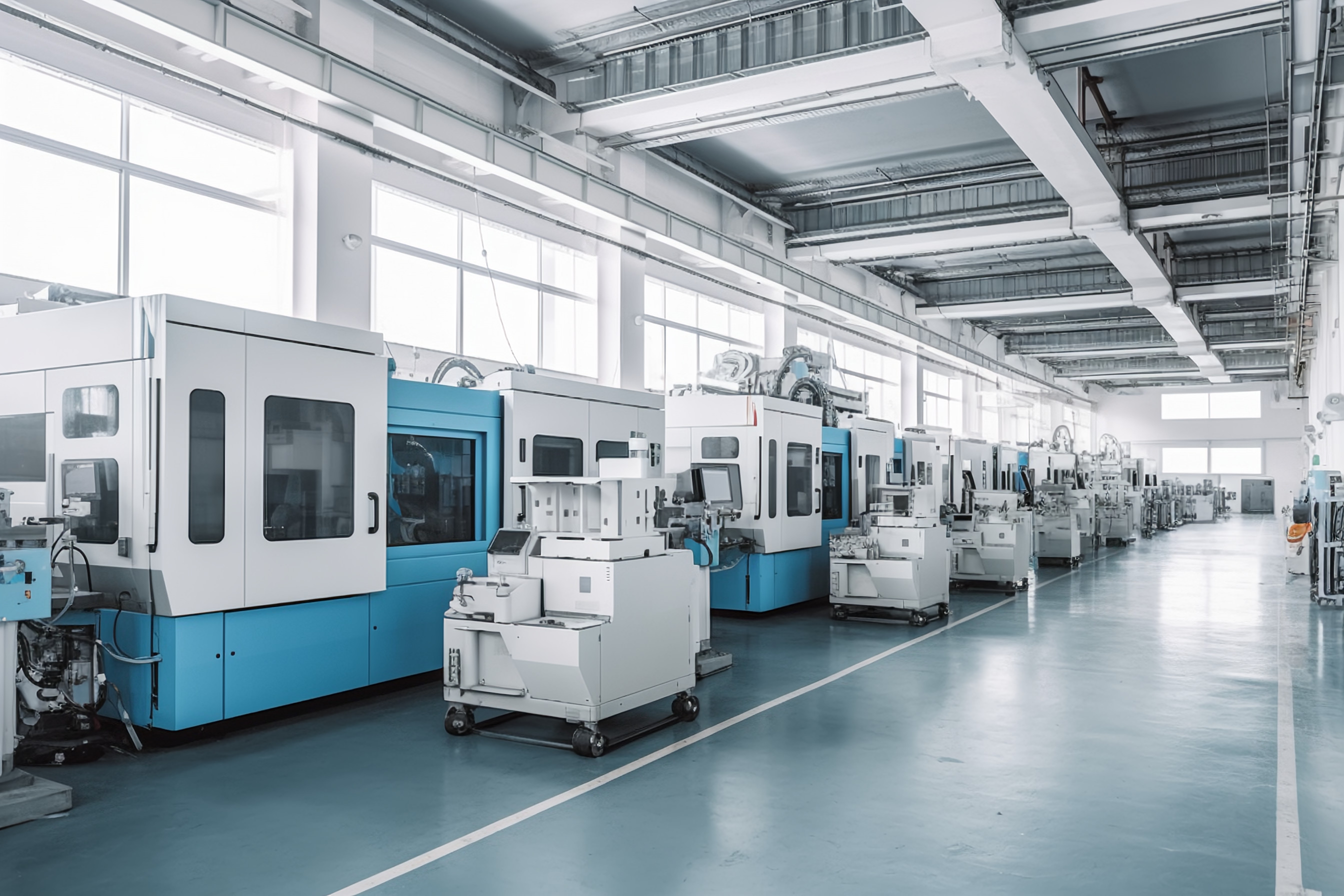
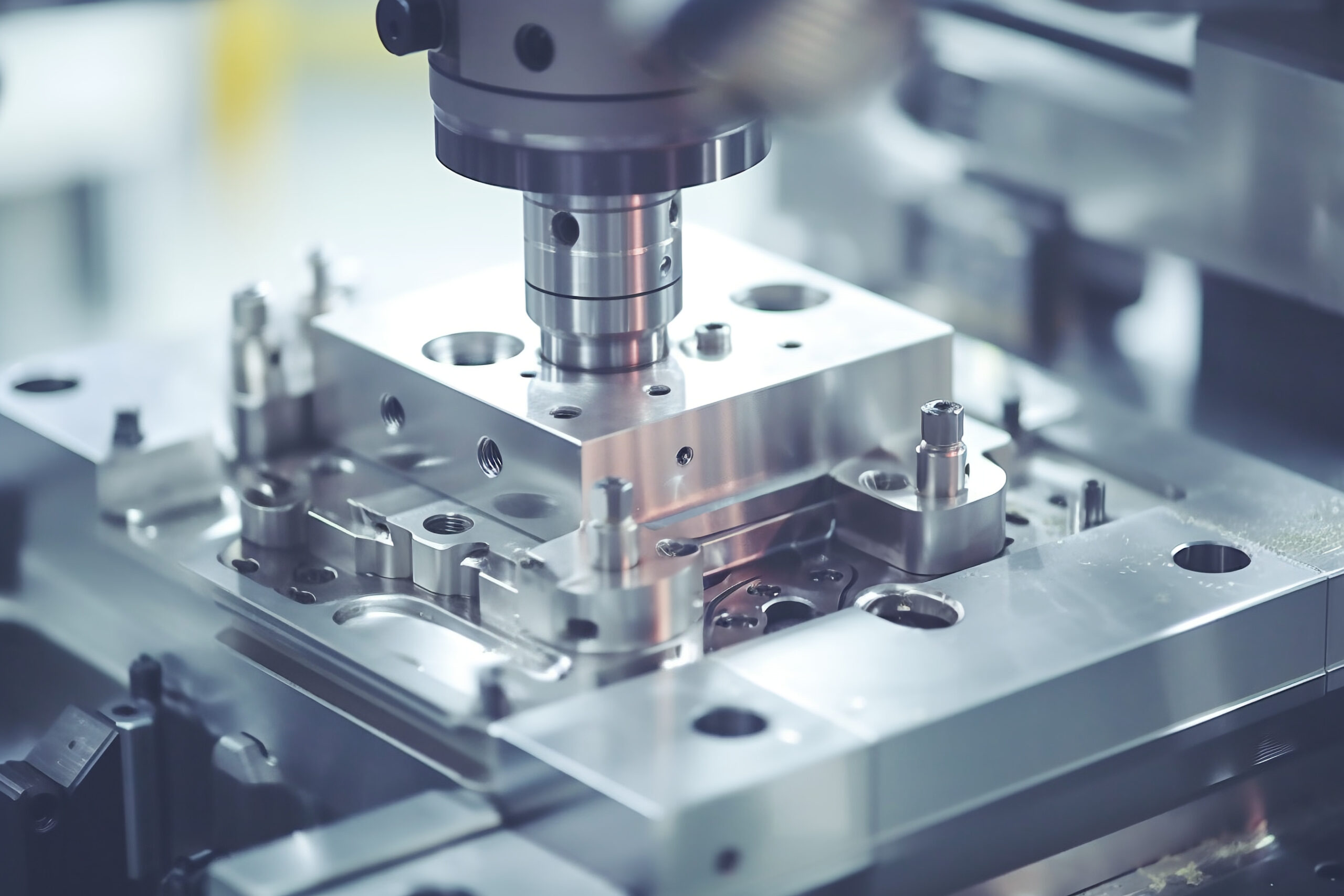
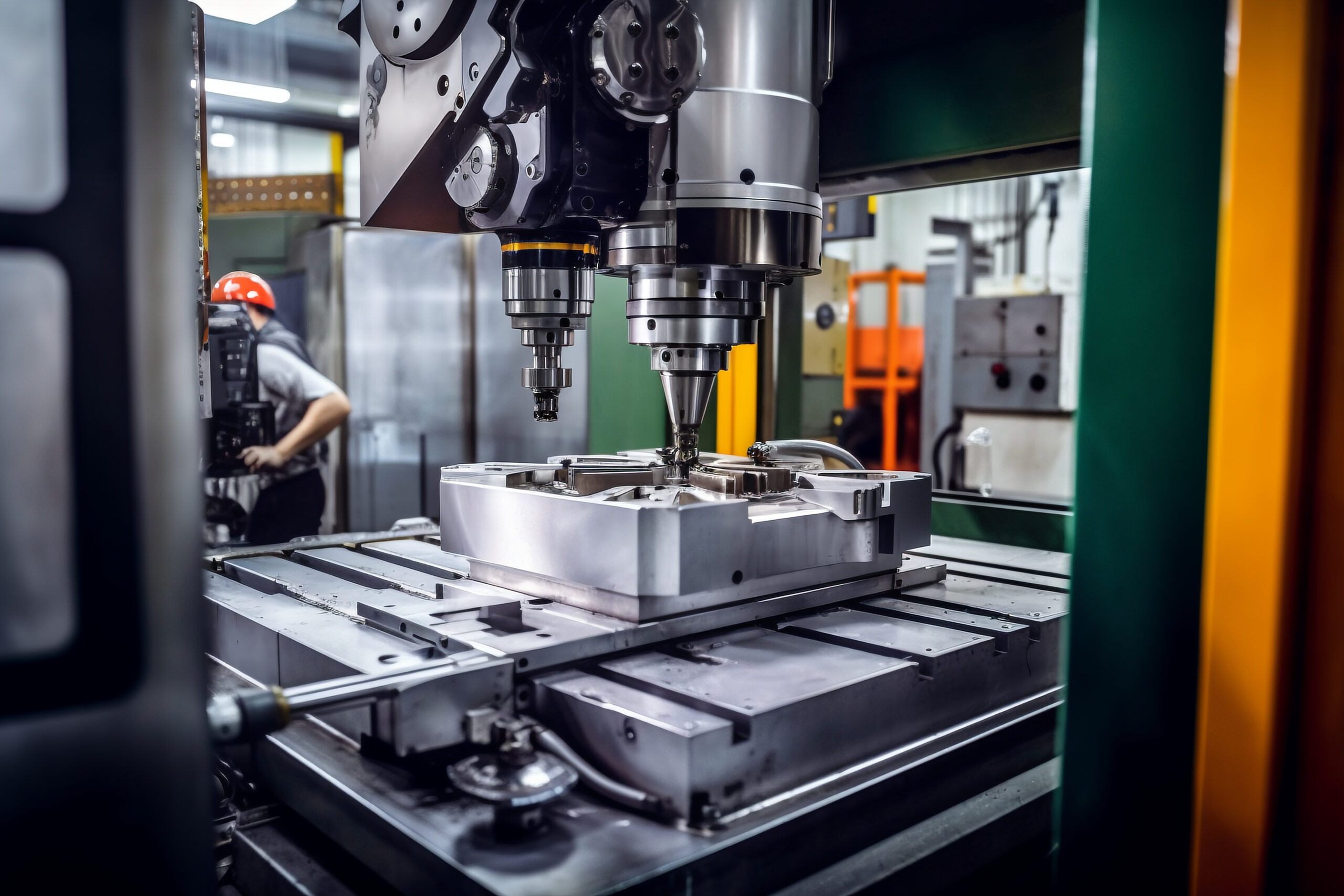
Computer Numerical Control (CNC) machining is a prevalent manufacturing technique that utilizes automated, swift cutting tools to shape items out of metal or plastic blanks. Commonly used CNC machines encompass mills with 3, 4, or 5 axes, as well as lathes and routers. Depending on the machine, the method of cutting CNC components varies: sometimes the cutting tool moves while the material remains stationary, other times the material moves while the tool is fixed, or both may move in unison.
Proficient operators program CNC machines by setting the trajectory of the tools according to the desired shape of the final product, which is outlined in a CAD model. Capable of sculpting nearly any type of metal alloy and hard plastic with exacting precision and consistency, CNC machines are instrumental across various sectors such as aerospace, medical, robotics, electronics, and manufacturing. TOPS offers CNC machining services and provides personalized quotes for over 40 different materials, ranging from basic aluminum and acetal to sophisticated titanium and specialized plastics like PEEK and Teflon.
Custom CNC Machining Services: Machining, Turning and Milling
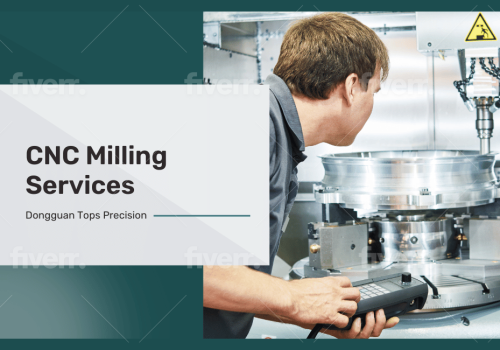
Custom CNC Milling Services
CNC milled prototypes and production parts in days ISO 9001:2015 Certified. Free standard shipping all over the world.
Send Your Inquiry Today
Send Your Inquiry Today
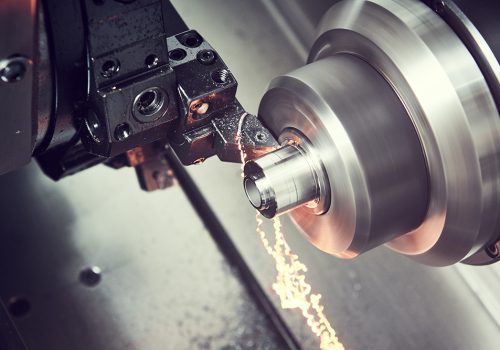
CNC Turning Service
CNC turning prototypes and production parts in days ISO 9001:2015 Certified. Free standard shipping all over the world.
Send Your Inquiry Today
Send Your Inquiry Today
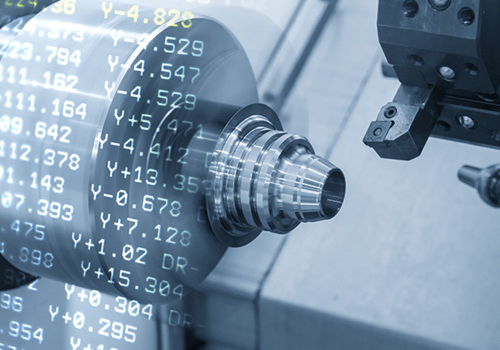
High Volume CNC Machining Services by TOPS
High volume CNC machining prototypes and production parts in days ISO 9001:2015 Certified. Free standard shipping all over the world.
Send Your Inquiry Today
Send Your Inquiry Today
CNC Machining Tolerances
| Feature | Description |
|---|---|
Maximum Part Size | Milled parts up to 80” x 48” x 24” (2,032 x 1,219 x 610 mm). Lathe parts up to 62” (1,575 mm) length and 32” (813 mm) diameter. |
Standard Lead Time | 1 week |
General Tolerances | Tolerances on metals will be held to +/- 0.005" (+/- 0.127 mm) in accordance with ISO 2768 unless otherwise specified. Plastics and composites will be +/- 0.010”. |
Precision Tolerances | TOPS can manufacture and inspect to tight tolerances, including sub +/- 0.001" tolerances, per your drawing specifications and GD&T callouts. |
Minimum Feature Size | 0.020” (0.50 mm). This may vary depending on part geometry and chosen material. |
Threads and Tapped Holes | TOPS can accommodate any standard thread size. We can also machine custom threads; these will require a manual quote review. |
Edge Condition | Sharp edges are broken and deburred by default |
Surface Finish | The standard finish is as-machined: 125 Ra or better. Additional finishing options can be specified when getting a quote. |
We provide a precision machining service capable of achieving a broad range of tolerances. The table provided above illustrates the standard tolerances applicable to CNC machining.
Metal CNC Machining Materials
Aluminum 6061
Aluminum 5052
Aluminum 2024
Aluminum 6063
Aluminum 7050
Aluminum 7075
Aluminum MIC-6
Copper 101
Copper C110
Copper C932
Copper 260
Copper 360
Nitronic 60 (218 SS)
Stainless Steel 15-5
Stainless Steel 17-4
Stainless Steel 18-8
Stainless Steel 303
Stainless Steel 316/316L
Stainless Steel 416
Stainless Steel 410
Stainless Steel 420
Stainless Steel 440C
Steel 1018
Steel 1215
Steel 4130
Steel 4140
Steel 4140PH
Steel 4340
A2 Tool Steel
O1 Tool Steel
Titanium (Grade 2)
Titanium (Grade 5)
Zinc Alloy
Plastic CNC Machining Materials
A clear glass-like plastic. Good wear and tear properties. Great for outdoor use.
Acetal
Delrin 150
Delrin 100
Resin with good moisture resistance, high wear resistance, and low friction.
Garolite G10 (FR4)
Garolite G10 (non-FR)
Garolite G11 (FR5)
Constructed of an epoxy resin with fiberglass fabric reinforcement, also called epoxy-grade industrial laminate and phenolic, this material offers high strength and low moisture absorption.
High-density polyethylene is a moisture and chemical-resistant plastic with good impact strength. The material is outstanding for outdoor applications as well as watertight containers or seals.
Offers increased mechanical strength, rigidity, good stability under heat and/or chemical resistance.
With almost twice the tensile strength of ABS, polycarbonate has superior mechanical and structural properties. Used widely in automotive, aerospace, and other applications that require durability and stability.
APEEK
PEEK (USP Class VI TECAPEEK)
PEEK GF30
Offering excellent tensile strength, PEEK is often used as a lightweight substitute for metal parts in high-temperature, high-stress applications. PEEK resists chemicals, wear, and moisture.
Has excellent electrical properties and little or no moisture absorption. It carries light loads for a long period in widely varying temperatures. It can be machined into parts requiring chemical or corrosion resistance.
This material surpasses most plastics when it comes to chemical resistance and performance in extreme temperatures. It resists most solvents and is an excellent electrical insulator.
Ultra-high molecular weight polyethylene. A general-purpose material. It offers a unique combination of wear and corrosion resistance, low surface friction, high impact strength, high chemical resistance, and does not absorb moisture.
ULTEM 2300
ULTEM (Polyetherimide) is a stiff, robust, performance-grade thermoplastic that can operate continuously in high-temperature environments (up to 340°F). It has one of the highest dielectric strengths of commercially available thermoplastics, making it an excellent electric insulator. Since ULTEM is also resistant to chemicals, easily cleaned, and does not absorb moisture, it is often used for medical applications.
CNC Machining Finishes
The part surface is left with a smooth, matte appearance.
This is a batch-based process that tumbles vibrating media to remove sharp edges and burrs on CNC parts. Tumbling can remove machine marks on exterior surfaces. Parts over 8” may require a manual review.
Type II (MIL-A-8625, Type II) creates a corrosion-resistant finish. Parts can be anodized in different colors—clear, black, red, and gold are most common—and are usually associated with aluminum. Type III (MIL-A-8625, Type III, Class 1/2 "hardcoat") is thicker and creates a wear-resistant layer in addition to the corrosion resistance seen with Type II. See examples of our anodized finishes in our metal finishes gallery.
A surface finish for titanium per AMS-2488 Type 2 specification. Also called Tiodize, this finish increases fatigue strength and the wear resistance of a part. Titanium anodized parts are common in aerospace and medical device manufacturing. Non-pigmented titanium anodize finishes will dull shine.
A hard coat anodize process that embeds PTFE to create a self-lubricating, dry contact surface with Type 3 hard coat’s protective properties. This finish can be used on aluminum alloys or titanium and increases the service life of the product. This finish conforms to the AMS-2482 Type 1 Hard Coat Anodizing with Teflon (Non-Dyed).
Provides corrosion resistance and good conductivity properties. Can be used as a base for paint. Can leave surface yellow/gold. Adds very little thickness, about 0.00001”-0.00004”. Chem film will conform to MIL-DTL-5541, TYPE I/II.
Improves corrosion resistance for 200 and 300 series and precipitation hardened corrosion-resistant steels. Thickness is negligible, about 0.0000001”. Conforms to ASTM A967, AMS-QQ-P-35, MIL-STD-171, ASTM A380, or AMS 2700.
This process is where powdered paint is sprayed onto a part and baked in an oven. This creates a strong, wear and corrosion-resistant, more durable layer than standard painting methods. A wide variety of colors are available to create the desired aesthetic.
An electrochemical process cleans steel parts to reduce corrosion and improve appearance, by making the metal brighter. Removes about 0.0001”-0.0025” of the metal. Conforms to ASTM B912-02.
Provides uniform nickel coating which offers protection from corrosion, oxidation, and wear on irregular surfaces. The finished part will be brighter. Thickness starts at .0001”. Conforms to MIL-C-26074.
Get More Tips With Our Complete Design Guide
Send Your Inquiry Today
CNC Machining FAQs
Our exact tolerances depend on the specific requirements of the drawings provided by your company. For our current equipment, the maximum accuracy we can process is 0.002mm. In addition, if your company has high-precision requirements, the cost will definitely increase accordingly.
Commonly used CNC materials include metals such as aluminum, steel, brass and copper, and plastics such as ABS, polycarbonate and POM. You can contact us directly for more information.
The cost is related to several factors, one is the material you choose, and the other is the quantity of your order. If you choose expensive materials and the quantity requirement is relatively small, the price will be relatively high, otherwise, the price will be low. Of course, this requires detailed analysis of the specific situation. We can only give an accurate quotation after receiving your detailed quotation requirements.
Tops can accept single part or mass production orders. Therefore, there is usually no strict minimum order quantity. No matter what your needs are, tops can provide you with a solution.
Delivery time will be determined based on the complexity of the product design, the ease of purchasing materials and TOPS's current production load. However, one of the advantages of CNC machining is its speed. Especially for simple parts, once the program is set up, the machining time is still very fast. Processing time may only take 1 day, but in order to get an accurate estimate, it is best to come to us directly for a quote.
Tops precision offers the capability to manufacture exceedingly intricate rapid prototypes and low-volume production components. Our CNC milling procedure accommodates an extensive array of materials suitable for diverse applications. We can attain standard tolerances as precise as +/- 0.05mm, and for even more exacting specifications, tolerances of up to +/- 0.01mm are attainable.
Milling is ideal for machining flat or contoured surfaces. During the machining process, the cutting tool rotates and moves on the workpiece to machine the material, creating features such as grooves, holes, pockets and complex contours. CNC lathes are best suited for cylindrical or rotating parts. During turning, the workpiece rotates and the tool moves along its axis to machine the material into cylindrical shapes such as shafts, pins and threaded parts. The choice of CNC milling and CNC lathe processes depends on the specific requirements of the part to be produced. Some manufacturers combine CNC mill and lathe functions in a single machine, called a CNC turning center or mill-turner, which in turn increases versatility and efficiency.
CNC turning is a relatively versatile machining process with a wide range of applications, especially suitable for processing parts with cylindrical or rotating features. These include: shafts, pins and fasteners, bushings and bearings, threaded components, flanges, etc.
Yes, we can produce plastic turned parts using CNC turning processes. Plastic turned parts are commonly used in a variety of applications across a range of industries due to their lightweight, non-corrosive and cost-effective nature. The main plastic raw materials used by our company are: Acetal (Delin), Polyethylene (PE), Polypropylene (PP), Nylon, PEEK, PVC, PC, PTFE, UHMW. Choose from our wide range of plastic materials and Send your drawing request to get customized plastic parts.
CNC Machining Applications
Rapid Tooling
Because CNC machining can cut a high variety of fully dense, durable materials like aluminum 5052 and stainless steel, it is perfect for creating fixtures or molds.
Rapid Prototyping
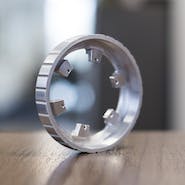
The range of affordable metal alloys (like aluminum 6061) and plastics (like acetal or ABS) combined with the speed of our skilled machinists makes our CNC machining services a great option for prototyping.
End-Use Production
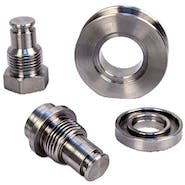
Performance-enhancing finishes, precision tolerances as low as +/- 0.001”, and certifiable material options make CNC machining an excellent technology for end-use parts.