
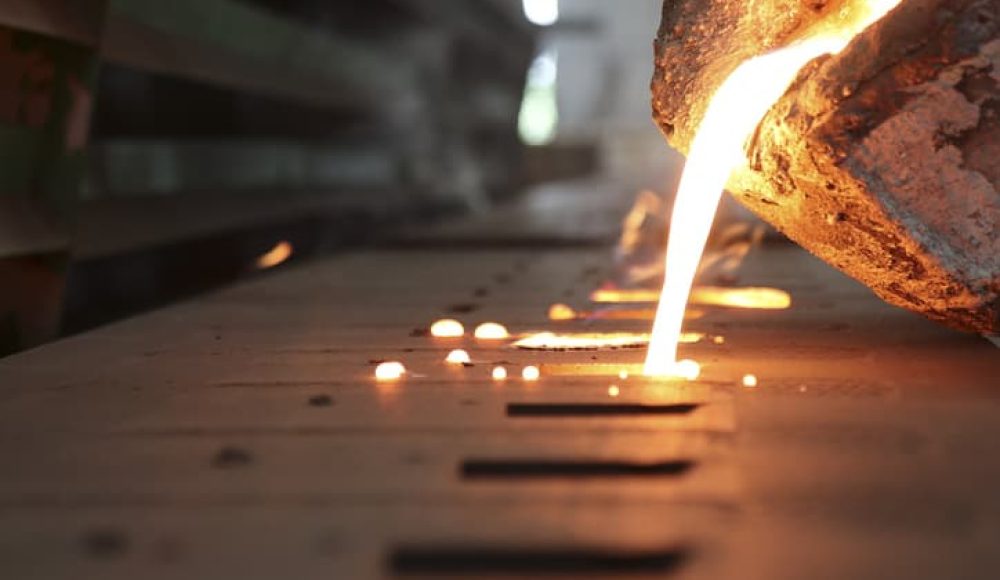
Casting is a fundamental and versatile manufacturing process that has been employed for centuries to create an array of products, ranging from intricate jewelry to robust industrial components. It involves shaping molten material by pouring it into a mold and allowing it to cool and solidify. The beauty of casting lies in its adaptability, with various methods tailored to specific materials and applications. In this article, we will delve into the fascinating world of casting, exploring the diverse casting processes that drive modern manufacturing.
Overview of Casting Process
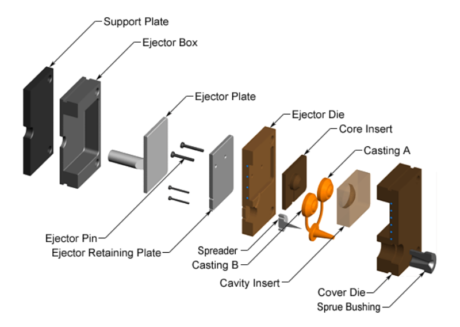
Before we dive into the specifics of different casting methods, let’s understand the basic premise. Casting involves the following fundamental steps:
1. Pattern Creation
A pattern, typically made from wood, plastic, or metal, is crafted to match the desired shape of the final product.
2. Mold Making
The pattern is placed in a mold, and a cavity is created around it. This mold can be made of various materials, including sand, metal, or ceramics.
3. Material Melting
The material to be cast, often a metal or alloy, is melted in a furnace.
4. Pouring
The molten material is poured into the mold.
5. Solidification
The material cools and solidifies within the mold, taking on its shape.
6. Removal
Once solidified, the casting is removed from the mold, often requiring post-processing such as trimming or surface finishing.
Casting Process
Now, let’s explore the different casting processes in detail:
1. Sand Casting Process
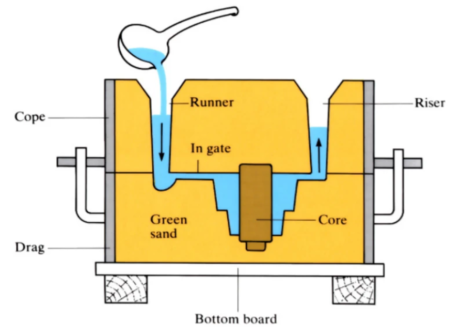
Sand casting is one of the oldest and most widely used casting methods. It involves creating a mold from compacted sand around a pattern, making it an excellent choice for complex shapes and large components. Sand casting is popular in the production of automotive and heavy machinery parts.
2. Gravity Die Casting
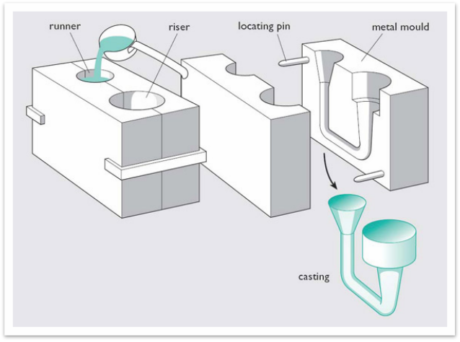
Gravity die casting, also known as permanent mold casting, employs a reusable metal mold. It’s particularly suitable for producing high-quality components with precise dimensions, often used in aerospace and automotive industries.
3. Pressure Die Casting
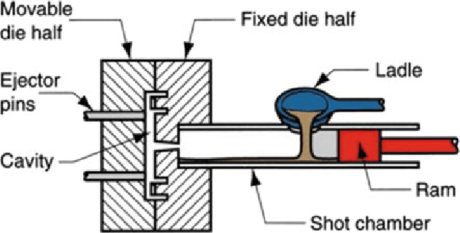
Pressure die casting takes advantage of high-pressure injection to force molten material into a metal mold. It’s favored for producing intricate, high-strength components, commonly found in the manufacturing of consumer electronics and automobile parts.
4. Investment Casting
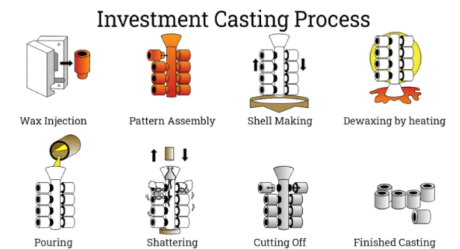
Investment casting, or the lost-wax process, is perfect for intricate and detailed components. It begins with a wax pattern, which is coated with a ceramic shell. Once the wax is melted out, molten material takes its place, yielding precise and delicate final products used in jewelry and aerospace industries.
5. Plaster Casting

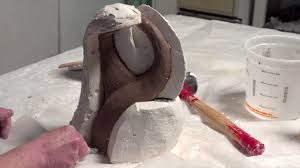
Plaster casting is a versatile method where a plaster mold is created, making it ideal for prototypes and artistic creations. The process is relatively simple, making it accessible for hobbyists and artists.
6. Centrifugal Casting
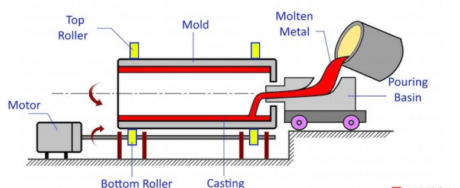
Centrifugal casting relies on centrifugal force to distribute the molten material evenly in the mold. This method is particularly useful for creating cylindrical or tubular objects, like pipes and decorative columns.
7. Lost-Foam Casting
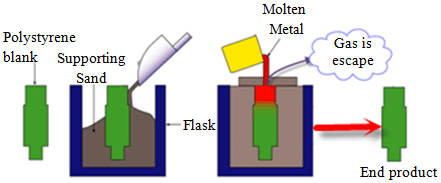
Lost-foam casting is a precise and economical method that uses an expandable foam pattern. It’s employed in the production of complex, near-net-shape components in the automotive and industrial sectors.
8. Vacuum Casting
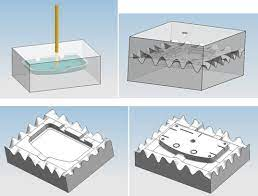
Vacuum casting is known for its ability to minimize porosity and ensure high-quality castings. It’s commonly used for critical aerospace components and medical devices.
9. Squeezing Casting
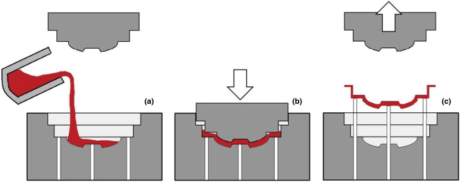
Squeezing casting, also known as squeeze casting, combines elements of both casting and forging. This method is perfect for producing components that require exceptional strength and density, such as parts for the defense and automotive industries.
10. Continuous Casting
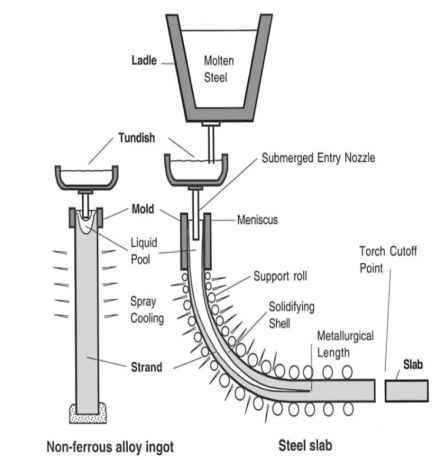
Continuous casting is a specialized method used for producing long, uniform shapes like pipes, bars, and structural components. It’s widely employed in the manufacturing of metals and alloys.
11. Shell Molding
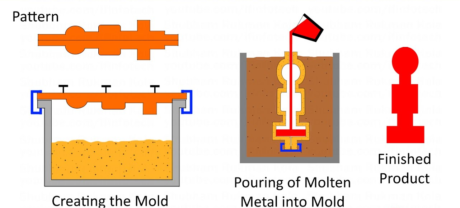
Shell molding, or shell casting, employs resin-coated sand to create thin, strong molds. It’s known for its precision and ability to produce intricate parts for various industries, including construction and automotive.
Conclusion
In conclusion, the diverse world of casting processes offers a wealth of options for manufacturers, artists, and hobbyists alike. Each method caters to specific needs, from the intricate precision of investment casting to the robust efficiency of gravity die casting. By understanding the nuances of these casting processes, one can choose the most suitable technique for their project, leading to the creation of high-quality and precisely crafted components.