
What is Machining?
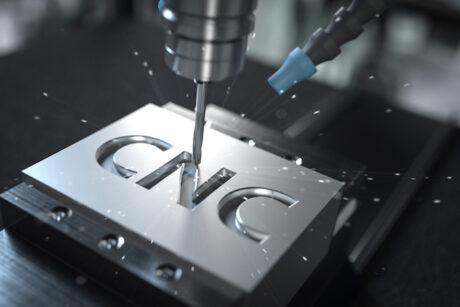
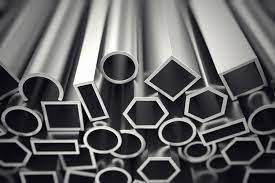
Machining is a process of cutting or shaping raw materials (such as aluminum, copper, stainless steel, industrial plastics, etc.) using equipment like CNC machines. This technique is extensively used in modern society. This article will cover all types of machining in the industry, with the introduction primarily divided into conventional machining, non-conventional machining, and the differences between these two types.
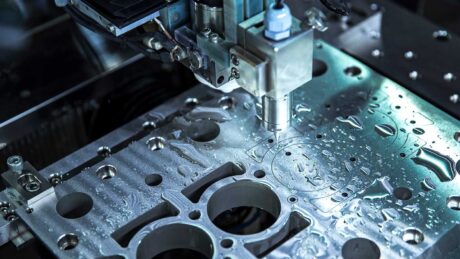
Types of Machining Process
Machining processes are divided into conventional and non-conventional types. Below are 20 conventional machining processes.
1. Conventional Machining Process
Conventional machining involves using mechanical equipment to cut and shape raw materials, creating the desired parts.
Turning
Turning is a mechanical cutting process that involves rotating the workpiece and using a cutting tool to remove material from its surface to form the desired shape. This process is typically done on a lathe, where the cutting tool cuts into the workpiece.
Drilling
Drilling involves using a rotating cutting tool (drill bit) to cut or grind material to form circular holes. This process can be performed on various materials, including metals, wood, and plastics.
Milling
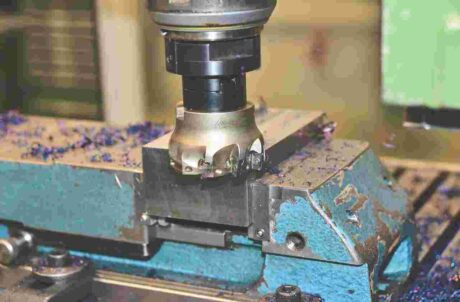
Milling involves using a rotating multi-edge cutting tool (milling cutter) to cut material from the surface of a workpiece, forming the required shape and contours. Milling is usually done on a milling machine where the workpiece and tool move relative to each other, cutting the material and removing excess.
Boring
Boring involves using a rotating cutting tool (boring tool) to enlarge, adjust, or precisely machine existing holes.
Reaming
Reaming involves using a rotating reamer to cut material, forming tapered or inverted conical holes. Its primary purpose is to create a specific hole shape in a part, allowing for the assembly or connection with other components.
Tapping
Tapping involves using a special cutting tool (tap or threading tool) to cut threads in a pre-drilled hole in the workpiece. Tapping is commonly used to create threads on bolts, nuts, and threaded holes.
Knurling
Knurling is a surface processing technique that forms a series of small, regular bumps or interlaced patterns on the workpiece surface to increase grip. This process often involves applying a tool (knurling tool) to the workpiece surface, producing a texture that can be gripped by fingers or tools.
Shaping
Shaping refers to the process of using cutting tools and machines to reduce material, shaping the workpiece into a specific shape or contour. It is a common machining method.
Lapping
Lapping is a high-precision grinding or polishing process, usually used for the surface treatment of parts to achieve very high flatness and surface smoothness, such as optical components, precision bearings, airtight sealing surfaces, glass, or ceramic workpieces.
Honing
Honing is used to improve the surface quality and dimensional accuracy of internal and external cylinders (such as manufacturing engine cylinders, hydraulic cylinders, steel tubes, mechanical parts, and precision bearings). This process is typically used to enhance the cylindrical shape, smoothness, and flatness of workpieces to meet specific engineering requirements.
Gear Cutting
Gear Cutting is a specific process used for manufacturing and machining gears. Gear Cutting can be used to produce various types and sizes of gears, including bevel gears, helical gears, internal gears, and external gears. This production process is crucial for gear manufacturing in mechanical engineering, automotive manufacturing, aerospace, and other engineering applications. Through Gear Cutting, the accuracy, precision, and durability of gears can be ensured to meet the requirements of various mechanical systems.
Slotting
Slotting is often used to cut and manufacture various types of slots on workpieces, including straight slots, angled slots, T-slots, keyways, etc. Keyways are commonly used to connect shafts and gears, straight slots for positioning workpieces, and T-slots for securing bolts. These slots can have different shapes and sizes for various engineering applications, such as manufacturing mechanical parts, tools, molds, and other components.
Threading
Threading is a machining process used to manufacture threads by using thread cutting tools to cut or form threads, creating threaded mechanical parts and components. Threads can be used in various applications, including connecting pipes, assembling mechanical parts, manufacturing bolts and nuts, etc.
Facing
Facing is a common machining operation, typically used to flatten or refine the surface or plane of a workpiece. The process involves placing a cutting tool, usually a cutter or milling cutter, on the surface of the workpiece. Material is gradually removed through the rotation of the workpiece or the movement of the tool, achieving the desired flatness, verticality, and surface quality.
Counterboring
Counterboring is a machining operation used to cut or process flat-bottomed holes inside existing holes. It creates a flat, smooth base, often for accommodating the bottom part of bolts or nuts, ensuring stability and reliability of fastened components.
Engraving
Engraving involves etching text, patterns, logos, or decorative textures on the surface of a workpiece. This process typically uses tools and techniques like cutting tools, tips, lasers, or electrochemical methods to remove material from the surface, creating the desired engraving effect.
Grinding
Grinding is a machining process used for removing material from the surface of a workpiece by grinding or cutting, enhancing its surface quality, dimensional accuracy, and shape. Grinding is often used for high-precision parts and components. There are various types of grinding processes, including surface, cylindrical, internal, centerless, and more, chosen based on the shape and requirements of the workpiece.
Planing
Planing is a machining process for reducing the surface of large workpieces, such as panels, metal plates, or wood, to meet requirements of flatness, planeness, and surface quality. This usually involves using a planer for cutting operations.
Sawing
Sawing is a common machining operation for cutting materials, meeting diverse manufacturing and construction needs. The sawing process varies based on the material type, cutting shape, and size requirements.
Broaching
Broaching involves using broaching tools, including internal broaches for internal holes and contours and external broaches for external contours, to create specific internal or external shapes and contours on a workpiece. This process is used for manufacturing various engineering parts, ensuring their accuracy and functionality.
2. Non-Conventional Machining Operations
Non-Conventional Machining Operations highlighting unique principles and technologies used to process materials, make parts, or create special shapes for specific needs. These methods are often used for materials that are difficult to machine or require high precision. It includes:
Chemical Machining: Involves using chemical solutions (acidic or alkaline) to remove surface material (like metals, ceramics, glass, and plastics) to create specific shapes and contours. It’s typically used for processing complex contours, very thin parts, high precision parts, and materials that are difficult to machine mechanically.
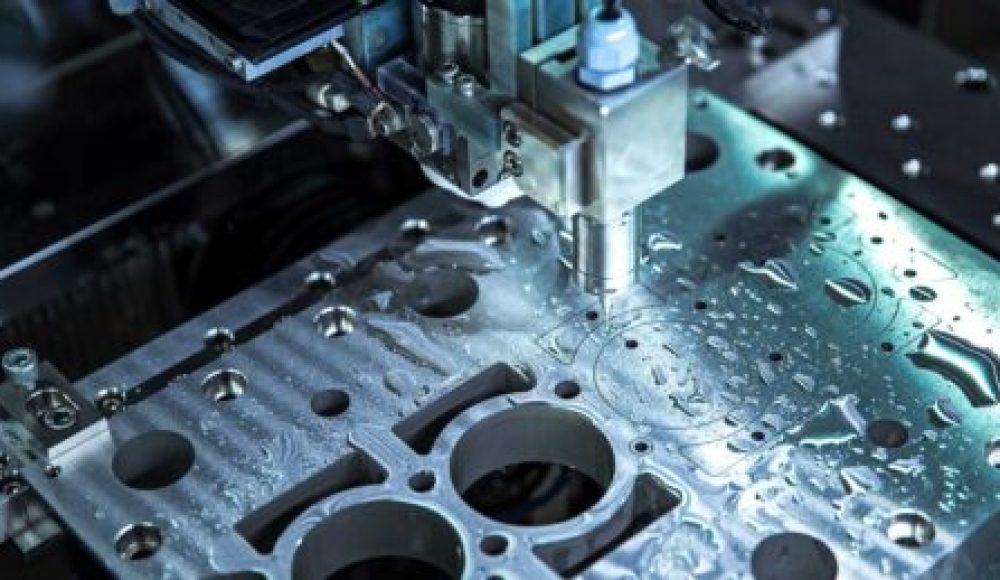
Electric Discharge Machining (EDM): A highly specialized and precise machining process. It removes material from the workpiece surface using electrical discharges, ideal for hard and conductive materials like hard alloys, steel, titanium alloys, and other metal alloys. EDM is known for its precision and ability to process complex geometries without physical contact, cutting force, or significant thermal impact. However, its processing speed is generally slow, making it more suitable for applications requiring extreme precision and surface quality, such as mold making and aerospace parts manufacturing.
Electro Chemical Machining (ECM): Uses electrochemical reactions to remove material from a workpiece. In ECM, an electrical current passes between the workpiece and an electrolyte solution, typically using a pair of electrodes. The tool electrode is usually made of metal, while the other electrode is the workpiece itself. The electrochemical reaction that occurs on the workpiece surface dissolves the material. ECM is advantageous for its precision, ability to process complex shapes, and absence of cutting stress and thermal impact. However, it has limitations, including slower processing speed and environmental and waste management issues due to its electrochemical nature.
Wire Cutting: Wire Cutting is used for cutting and processing conductive materials like metals and alloys. The process involves creating an electric arc discharge between the workpiece and the cutting wire, removing material through the high temperature and energy of the electric sparks. Wire Cutting offers high precision, can handle hard materials, doesn’t involve physical contact or cutting stress, can process complex shapes, and does not cause tool wear as it doesn’t require physical cutting tools.
Electrochemical Grinding: This technique combines electrochemical processing and grinding principles for processing conductive materials, such as metals and alloys. The primary goal of Electrochemical Grinding (ECG) is to achieve precise shape processing and surface improvement, while reducing thermal deformation and mechanical stress. ECG is known for its high precision, ability to handle hard materials, reduced heat deformation, absence of cutting stress, improved surface quality, and capability to process complex contours. It’s commonly used in manufacturing aerospace components, medical devices, molds, and other parts requiring high precision and surface quality.
Abrasive Jet Machining: This method uses high-speed abrasive particle jets to remove material from a workpiece surface. In the AJM process, a jet mixed with air or gas and abrasive particles is sprayed at high speed onto the workpiece surface, grinding and removing material. This process is similar to sandblasting but uses high-speed gas streams instead of compressed air. AJM is advantageous for processing a variety of materials, not causing heat deformation, enabling complex shapes, and not requiring physical contact, thus preventing tool wear. It’s frequently used for brittle materials, hard materials, ceramics, complex contours, and parts requiring high surface precision. However, AJM has limitations, including slower processing speed, precision constrained by particle size, and abrasive wear.
Laser Cutting: A non-contact machining method using laser beams to cut and process materials such as metals, plastics, and wood. The highly concentrated laser beam focuses on the workpiece, melting or vaporizing the material to shape or cut it. Advantages include high precision, fast processing, versatility in materials, no physical contact or tool wear, high-quality cutting edges, minimal thermal impact, and the ability to create complex shapes. Widely used in industries like metalworking, automotive, electronics, and aerospace. However, laser cutting systems require significant investment and complex maintenance.
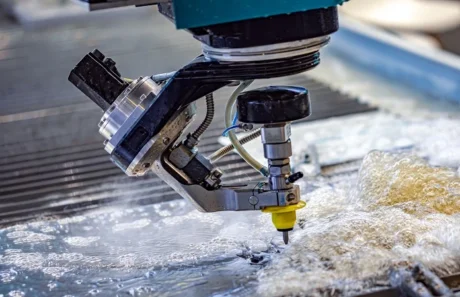
Water Jet Machining (WJM): Utilizes high-speed water jets, sometimes mixed with abrasives, to cut, process, and clean material surfaces. Suitable for various materials including metals, plastics, glass, stone, ceramics, and composites. Benefits include high precision, no heat deformation, versatility, no physical contact or tool wear, and the ability to create complex shapes. Commonly used in high-precision, clean cutting applications in aerospace, automotive, glass manufacturing, construction, stone cutting and engraving, and food processing.
Ultrasonic Machining (USM): Employs high-frequency ultrasonic vibrations to remove material from surfaces. Ideal for hard, brittle materials like ceramics, hard alloys, and ceramic composites. Offers high precision, no heat deformation, no physical contact, and suitability for hard and brittle materials, enabling complex shape processing without tool wear. Typically used for manufacturing small or complex parts such as ceramic components, hard alloy tools, and micro-mechanical components. However, limitations include slower processing speed, low material removal rate, high equipment costs, and maintenance complexity of the vibration system.
Electron Beam Machining: Utilizes high-velocity electron beams to remove material from workpieces for operations like cutting, drilling, welding, and surface improvement. Typically applied to conductive materials such as metals and alloys. It offers high precision, can process hard materials, doesn’t generate cutting stress, requires no physical contact, and can create complex shapes and minute details. Common in high-precision fields like aerospace, nuclear components, medical devices, and semiconductor manufacturing. Requires vacuum environments to prevent interaction of the electron beam with atmospheric molecules, adding to its complexity and cost.
Laser Beam Machining & Ion Beam Machining: Both use beams (laser and high-energy ion, respectively) to remove material from workpieces for cutting, drilling, welding, marking, and surface improvement. Suitable for conductive materials like metals, plastics, ceramics, and glass. Advantages include high precision, high-speed processing, versatility in materials, no physical contact, and ability to create complex shapes and fine details. Used in aerospace parts, automotive components, electronics, medical devices, jewelry, printing, and engraving. Requires specialized equipment and skills, with high demands on the working environment.
Plasma Arc Machining: Employs high-temperature plasma arcs to remove material from workpieces for cutting, etching, drilling, welding, and surface improvement. Ideal for conductive materials like metals and alloys. Benefits include high precision, high-speed processing, versatility, ability to process thick materials, no physical contact or tool wear, and no cutting stress. Commonly used for manufacturing metal parts, steel cutting, welding, etching circuit boards, and surface improvement. Requires specialized equipment and control of the operational environment due to high temperatures and energy.
Magnetic Field Assisted Machining: Uses magnetic fields to influence the material removal process on workpiece surfaces. Often used to enhance the efficiency and precision of traditional machining methods, especially for conductive materials like metals, alloys, and magnetic materials. Benefits include higher machining precision, lower cutting force and wear, better surface quality, and higher processing efficiency. This method helps reduce wear and heat accumulation during machining, thereby minimizing material deformation. Requires specialized equipment and control systems to generate and maintain magnetic fields, with adjustments for specific applications.
Photochemical Machining: Also known as photolithography etching or photo etching, this non-traditional machining method uses photochemical reactions to remove material from thin metal sheets, creating precise metal parts and components. Typically processes thin metal materials like copper, stainless steel, and aluminum to make parts with complex contours and high precision requirements. Advantages include high precision, low workpiece deformation, ability to process complex shapes and fine features, no tool wear, high batch production efficiency, and reduced material wastage. Commonly used for manufacturing electronic components, optical parts, solar panels, circuit boards, media molds, grids, sieves, labels, small holes, and films, demanding high precision and quality.
Comparison Between Conventional and Non-conventional Machining
Conventional and non-conventional machining are distinct methods with significant differences in working principles, material compatibility, precision, surface quality, speed, and applications.
Compatible Material: Conventional machining is typically suitable for well-conductive and mechanically robust materials like metals and alloys, which are easily cut physically. Non-conventional machining offers broader material compatibility, applicable to metals, ceramics, plastics, glass, and composites without being limited by conductivity.
Physical Tool Requirement: Conventional machining requires physical cutting tools like lathes, milling cutters, and drills that physically contact the workpiece. In contrast, non-conventional methods often don’t need physical tools but use alternate energy forms or processes like electrical discharge, laser beams, ultrasonic vibrations, and water jets to modify or remove material.
Preferred Surface Finish: Conventional machining, while generally faster, can sometimes result in relatively lower surface quality, necessitating further processing or polishing. Non-conventional methods typically achieve higher surface quality, often without the need for additional finishing, producing smooth surfaces suitable for demanding applications.
Accuracy: Conventional machining usually offers high precision, ideal for manufacturing precision parts and components. Non-conventional machining also achieves high accuracy, unaffected by wear and deformation of cutting tools, suitable for applications like microelectronics manufacturing.
Machining Speed: Conventional machining typically has higher processing speed, making it suitable for mass production. Non-conventional machining tends to be slower, fitting for small batch production or applications requiring high precision, generally needing longer processing times.
Summary
This overview provides a detailed understanding of machining processes and methods. When choosing a machining method, it’s essential to consider specific processing needs, material characteristics, and requirements. Both conventional and non-conventional machining have unique advantages and limitations, requiring a comprehensive evaluation of various factors.